
Clinical Overview
Venous thromboembolism (VTE) is the third leading cause of cardiovascular death after heart attack and stroke.1 Globally, there are approximately 10 million VTE cases each year, with pulmonary embolism (PE) responsible for the majority of VTE-related deaths,1,2 Mechanical thrombectomy enables physicians to remove thrombus without reliance on lytic drugs and restore blood flow more immediately.
What is VTE?
Venous thromboembolism (VTE) refers to the formation of blood clots in the veins that block blood flow. VTE includes deep vein thrombosis (DVT), when a clot forms in the deep veins (usually in the legs), and pulmonary embolism (PE).
What is PE?
Pulmonary embolism (PE) occurs when part of a blood clot breaks free and travels to the arteries of the lungs. It can be life-threatening and require immediate treatment.
ENGULF CLINICAL PROGRAM
The ENGULF clinical program was designed to support a methodical, stepwise approach to bringing the Hēlo® Thrombectomy System to market. Initial feasibility experience with the Gen 1 system established safety and procedural performance while generating key early insights through close collaboration with clinical partners.
As the program advanced into the pivotal study, these learnings informed continued iteration, including the introduction of the Audible Flow Indicator (AFI), the evolution to Gen 2, and later Hēlo® Return—together supporting the development of a complete solution for the treatment of pulmonary embolism.
ENGULF CLINICAL EXPERIENCE: 155 PATIENTS TREATED


ENGULF PIVOTAL STUDY
The ENGULF Pivotal Study was a prospective, multicenter clinical evaluation that demonstrated safety and effectiveness of the Hēlo® Thrombectomy System for the treatment of acute intermediate risk pulmonary embolism (PE). The study enrolled 130 patients (40 treated with blood return) across 19 sites in the United States, generating robust clinical evidence supporting the use of the Hēlo® System in patients with PE.
Hēlo® Thrombectomy System + Hēlo® Return Results*
28%
RV / LV ReductionBaseline RV / LV Ratio: 1.51
Abs. RV / LV Reduction: 0.45
0
Major Adverse EventsNo MAEs were reported in patients treated with blood return
10 mL
Median Blood Loss1.1
Avg. Passes / ProcedureDesigned for no corking or “lollipopping”
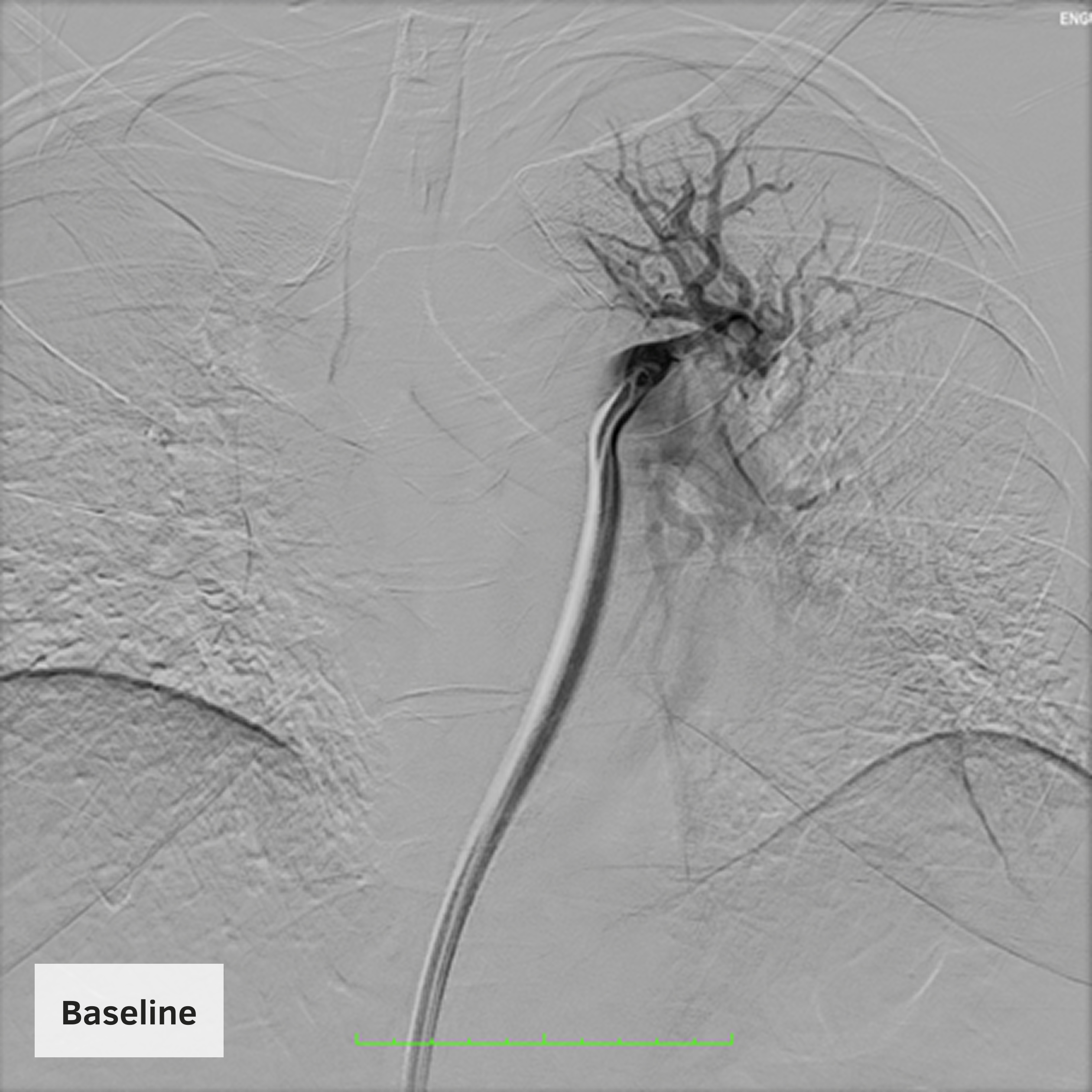
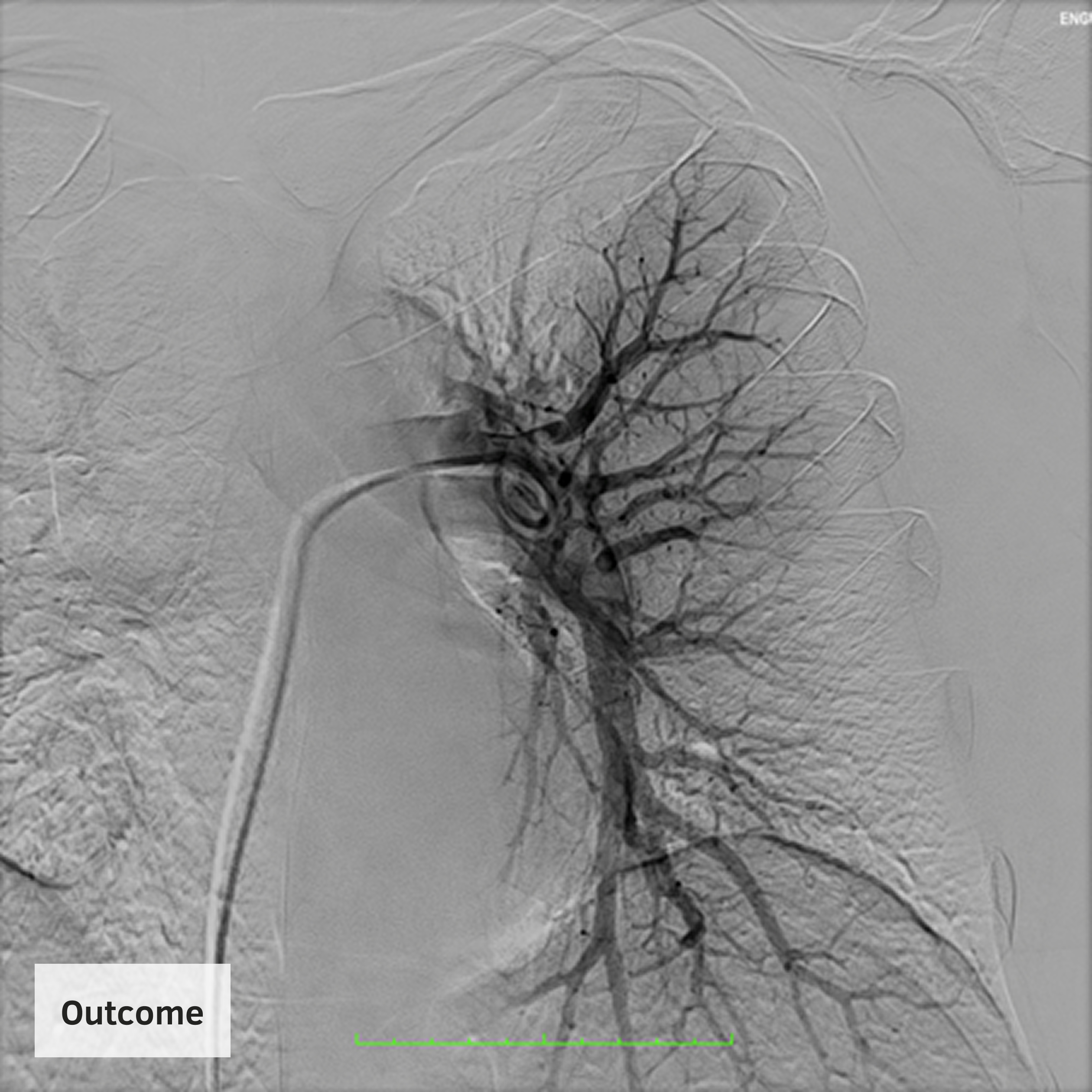
CLINICAL CASE OUTCOME
References:
1. Di Nisio M, van Es N, Büller HR. Deep vein thrombosis and pulmonary embolism. Lancet. 2016;388(10063):3060-3073. doi:10.1016/S0140-6736(16)30514-1
2. Goldhaber SZ, Bounameaux H. Pulmonary embolism and deep vein thrombosis. Lancet. 2012;379(9828):1835-1846. doi:10.1016/S0140-6736(11)61904-1
*Results shown for patients treated with blood return (n= 40) . Data presented by Dr. Andrew J. Klein, SCAI 2026.

